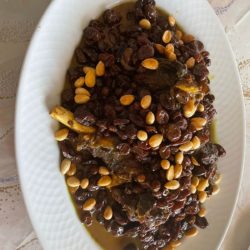
Mrouzia Recipe
Mrouzia is a sweet and savory Moroccan lamb tagine, seasoned with ras el hanout, ginger, saffron, and cinnamon. Traditionally, honey is used for sweetness and also acted as a preservative before refrigeration.
Ingredients
Meat and Marinade
- 1 kg of trimmed lamb with bones shanks, neck, or shoulder, cut into large pieces
- 1 1/2 tbsp Ras-el-hanout for Mrouzia preferably freshly ground
- 1/2 tsp ground pepper a blend of black and white
- 2 tbsp vegetable or olive oil
For Cooking the Meat
- 4 tbsp mixed olive and vegetable oils
- 2 tsp ground ginger
- 1 medium yellow onion finely chopped, optional
- 1 tsp smen
- 1 tsp salt
- 1 cinnamon stick
- 1/2 tsp saffron threads
For Cooking the Raisins
- 500 g dark raisins preferably not overly sweet
- 1 tsp Ras-el-hanout Mrouzia blend, preferably freshly ground
- 4 tbsp clear honey or icing sugar
- 1 tsp ground cinnamon
Garnishing
- 150 g whole blanched almonds
Instructions
Marinate the Meat
- In a large container, combine the spices with 1 to 2 tablespoons of oil. Brush the meat thoroughly with this mixture, massaging it well to ensure full coverage. Cover the container and refrigerate for 6 to 12 hours.
Cook the Meat
- In a heavy-bottomed pot or Dutch oven, add the marinated meat, onion, spices, smen, and about 1/4 cup of water. Set over medium heat and cook for 10 minutes, stirring occasionally to rotate the meat and ensure all sides are immersed in the liquid. This step is essential for allowing the meat to absorb the flavors, so take care during these first 10 minutes.
- Gradually add enough water to cover the meat, pouring it near the sides of the pot to avoid washing off the spices. Add the remaining oil and bring the liquid to a gentle simmer.
- Cover the pot and let the meat continue to simmer over medium-low heat for around two hours, or until it becomes tender. During cooking, check frequently to ensure the meat doesn’t stick to the pot or run low on liquid.
Cook the Raisins
- While the meat is cooking, place the raisins in a bowl and cover them with cold water. Let them soak for at least an hour, then drain.
- Once the meat is tender, add the drained raisins, the teaspoon of ras el hanout, and the honey or sugar. Continue cooking over medium-low heat, watching carefully. The sauce should reduce and thicken within 20 to 30 minutes, with no watery liquid remaining.
Fry or Roast the Almonds
- Prepare the almonds for garnish in advance or while the meat cooks. Choose one of the following methods:
- To Oven-Roast: Preheat the oven to 325°F (160°C). Spread the blanched almonds on a baking sheet and roast for about 25 minutes, tossing them occasionally to ensure even roasting. They should be golden and crunchy by the end. Adjust the time if needed to achieve the right color and texture.
- To Fry: Heat oil in a small, deep pan until it’s warm (but not too hot, as overly hot oil won’t yield the desired result). Stir the almonds occasionally, removing them once they turn lightly golden. Spread them on paper towels or a kitchen towel to drain any excess oil.
Serving and Storing
- Serve mrouzia hot. Arrange the meat at the center of a warm serving plate, top with the confit of raisins, and drizzle with any remaining thick amber sauce. Garnish generously with the almonds, and, if desired, sprinkle with dried rose petals for an elegant finish.
- Store mrouzia in an airtight container in the fridge for a couple of weeks or freeze it for several months. It’s best to portion the dish into separate containers for easy thawing. Keep the almonds separate or fry them fresh as needed, adding them just before serving.
Notes
The recipe yields 8 servings when following the Moroccan tradition of savoring the dish in small portions rather than fully indulging in it. When served as a standalone main course, it provides for 4.
In my experience living on my own, I occasionally used lamb chops for a quicker version, which was equally delicious. However, this dish truly shines with a slow-cooking process.
I find it practical to cook Mrouzia in a Dutch oven or a sealed clay pot in the oven. I set a timer and check periodically, ensuring even cooking while minimizing the risk of sticking or burning. This method offers full control.
Before modern refrigeration, Mrouzia was stored in a deep, interior-glazed clay urn. A layer of meaty bones went in first, followed by the raisins, with the thick sauce added last. The urn would then be covered with oiled paper and sealed with string. Some families stored almonds inside, while others waited to add them when serving.
It's worth noting that the original recipes included a significant amount of suet in the sauce, aiding in preservation; this layer of oil and fat protected the meat once the Mrouzia cooled in jars.
Traditionally, Mrouzia was shared with all visiting family and neighbors. Whenever someone stopped by, at any time of day, we would heat some up and serve it with bread. As long as Mrouzia was available, sharing was a must. This dish belonged to the community rather than just the family who prepared it. In return, we expected other Mrouzia to come our way—a family signature dish, showcasing the cook’s expertise in creating a perfect confit.